
Project desk: +1 732 919 3119 · [email protected]Global project coordination
Industrial facilities illuminated by Dialight

Application-led specification

Dialight lighting for environments where conditions drive selection

Each application changes the useful balance among luminous flux, distribution, glare, color quality, enclosure, service access and controls. These profiles frame the questions; final calculations and product documentation remain project-specific.

Four operating contexts, four different briefs

Manufacturing lighting

Manufacturing

Machine geometry and inspection tasks require attention to vertical illumination, shadow control and color rendering. High efficacy can reduce input power, but narrow distributions or high luminance may create discomfort. Review candela distribution and UGR alongside lm/W.

Warehouse aisle lighting

Warehousing

Aisle width, rack height and occupancy patterns determine distribution and sensor zoning. A broad beam suited to open areas may waste light on rack tops. Sample-bay validation helps check modeled results where reflectance and obstructions vary.

Hazardous industrial lighting

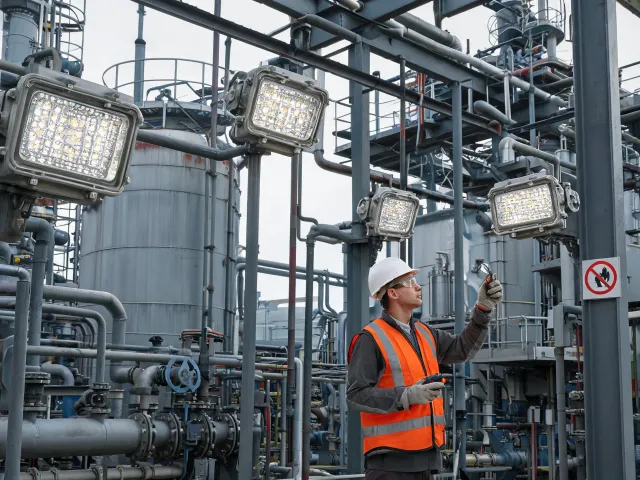
Process and hazardous areas

Area classification, ambient temperature, corrosive exposure and ingress risk must be documented before selection. Certification marks are configuration- and region-dependent. Installation must follow applicable codes and the authority having jurisdiction.

Outdoor infrastructure lighting

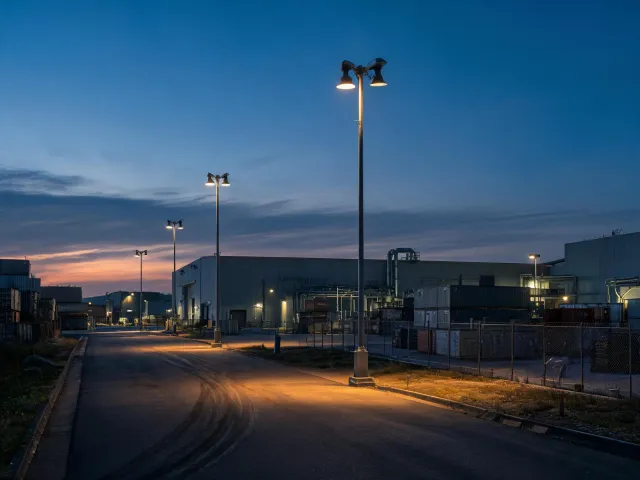
Outdoor infrastructure

BUG rating, pole spacing, wind exposure, IP rating and surge protection shape an outdoor system. Higher output is not a substitute for suitable distribution; spill light and glare require optical control at property boundaries.

Commercial interior lighting

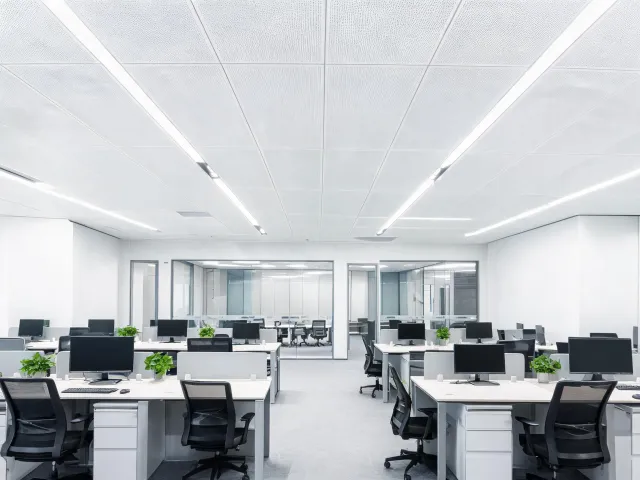
Commercial interiors

Visual comfort, facial rendering and daylight interaction sit beside energy targets. CRI Ra 80 or 90+, CCT and TM-30 information help teams discuss color quality without relying on one number.

Transportation facility lighting

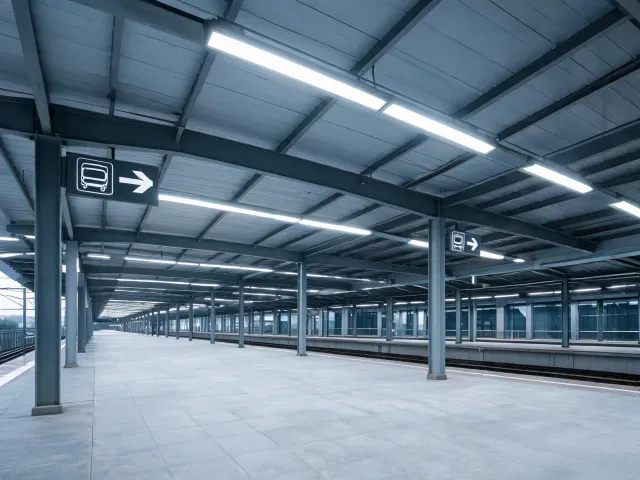
Transportation and public access

Long operating hours, public safety and difficult maintenance access reward serviceable planning. Emergency operation, controls failure states and replacement strategy should be addressed before procurement.

6Application briefs
8Core spec fields
2Controls architectures
1Site validation plan

Selection trade-offs worth documenting

Efficacy versus visual comfort

Maximize lm/W: lower connected load can reduce operating energy. Prioritize visual quality: distribution, UGR and CRI may matter more for the task. Compare delivered light and comfort, not source efficacy alone.

Centralized versus distributed controls

Centralized: common strategies and reporting are easier to administer. Distributed: local zones offer flexibility and fault isolation. Commissioning capability and future changes should influence the architecture.

Integrated versus serviceable components

Integrated: compact packaging can improve optical and thermal coordination. Serviceable: replaceable drivers or light engines may extend useful system life. Access, spares and warranty terms belong in the review.

Test the assumptions behind the application brief

Use photometric calculations, current configuration data and a representative site review before final approval.

Build a review path